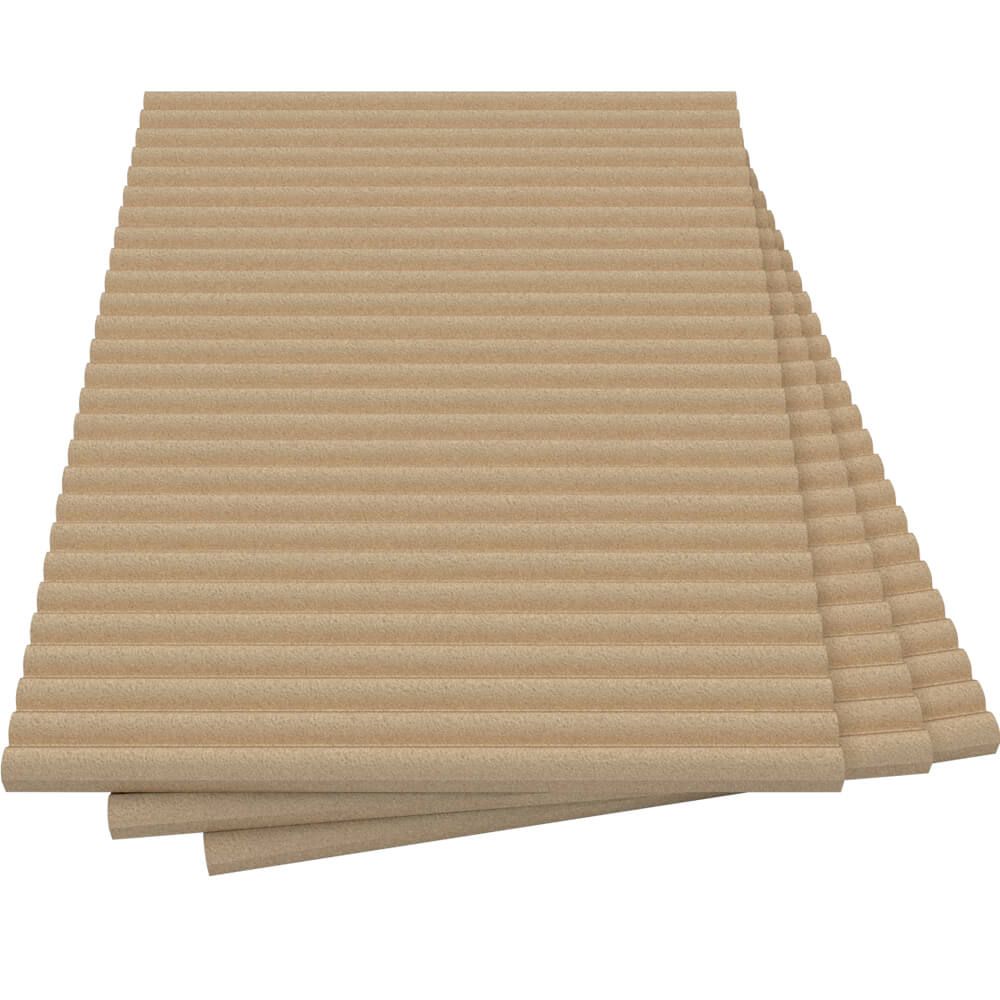
Do not glue a loose firebox panel simply to stop it moving. Some appliances use panels held without permanent adhesive, with a specified fitting clearance. First establish whether the panel has lost its support or whether its movement is consistent with the original installation arrangement.
Check the support and neighbouring components
Inspect the stove when it is completely cold. Photograph the panel position, edges and support points. A panel can appear intact yet no longer sit correctly because a neighbouring part has failed.
Look for broken corners, growing areas of missing material and exposure of the appliance body. If the panel could fall or its role in supporting a baffle is unclear, determine the required repair before further use.
Why can unplanned gluing be unsuitable?
A permanent joint may alter how components move during heating and make later replacement harder. BLACK Fire Cement has defined uses for suitable small rigid repairs; it does not automatically restore a panel's geometry or support arrangement.
Where the appliance maker specifies replacement, follow the required material and part profile. Vitcas vermiculite fireboard is an example of a material for compatible panels. Its ability to be cut to size does not make it a replacement for every lining.
What should you prepare when ordering a replacement?
- The appliance model, part reference and a photograph of the complete lining arrangement.
- Nominal dimensions, thickness, cut-outs and chamfers.
- The material and fitting method confirmed in the appliance documentation.
- Details of damaged supports that also need repair.
Do not rely only on measuring an old panel with missing edges. After fitting, check all parts that work together. Repeated failure in one location calls for investigation so the replacement is not subjected to the same unresolved problem.