A visible gap around the pipe may be in the decorative layer or belong to an important installation detail. Before filling, its function must be determined. The mere location near the chimney does not justify choosing a single universal compound for all parts of the passage.
Collect data on the pipe and wall
Record the material and system designations, as well as the construction of the partition. Add a photo with a wider view and dimensions of the available space. The documentation should allow distinguishing the pipe connection, the required clearance, and the finish of the adjacent surface.
Check whether the detail should remain accessible or allow movement. Do not close the opening accidentally for an even appearance. If the information remains unclear, determine the required arrangement before applying the material that will cover its essential part.
Each function leads to a different product
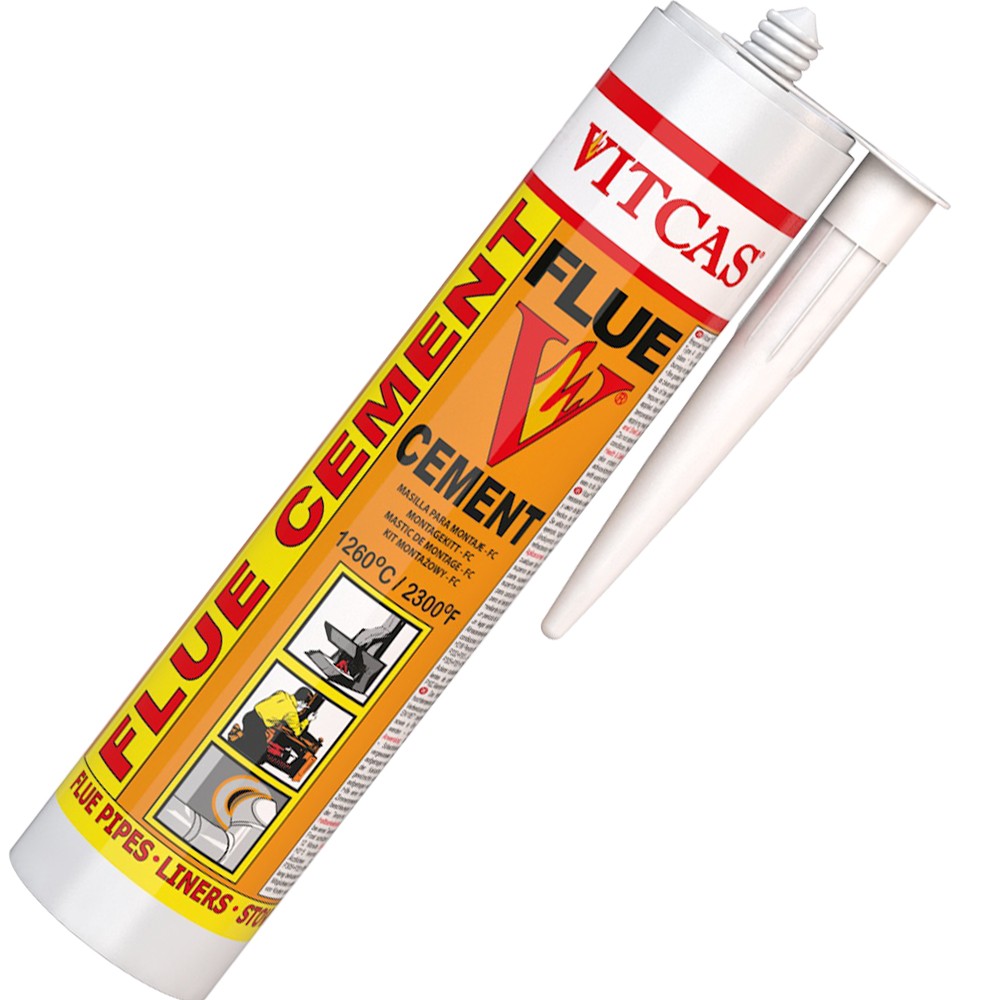
Flue Cement has described applications with compatible ceramic chimney elements. It does not automatically become a compound for any metal pipe. Selection should correspond to the system and the actual geometry of the joint.
Heat Resistant Filler is used for certain minor finishing repairs. Fire Retardant Silicone has other tasks in fire protection. Neither the appearance of the cartridge nor high temperature replaces the documentation of a complete penetration.
Describe the repair before covering it
Prepare the work on a cooled system, with proper substrate and access. Maintain the application, setting, and further requirements of the product and equipment. Covering a trace with decoration does not confirm the tightness of the flue or the parameters of the partition.
Keep documents and photographs, indicating the product at its actual location. During the next change, it will be clear what constitutes the finish and what is part of the system. Such a record facilitates assessment without guessing the function of an unidentified layer left around the pipe.