A mortar's supplied form tells you how to prepare it, rather than where it can be used. Ready-mixed material can be convenient, while dry mix needs measured water. For an outdoor oven, check temperature, joints and weather exposure before comparing preparation methods.
Start with the application
Vitcas HPM Heatproof Mortar is ready mixed for suitable thin refractory joints in protected indoor applications. It is not automatically a choice for rain-exposed masonry. Convenience does not remove the product's application limits.
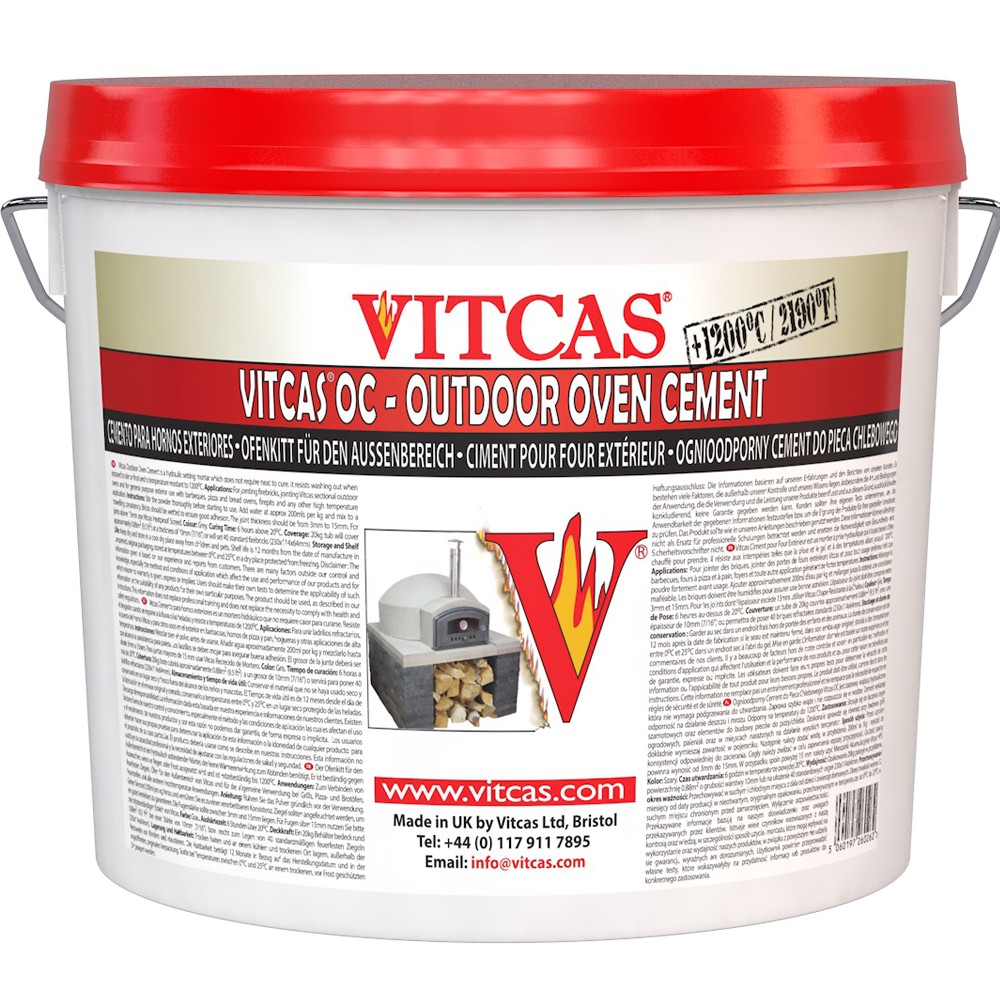
Outdoor Oven Cement is a dry-mix mortar intended for compatible exterior construction. Compare the brick and joint-geometry requirements too. Do not substitute one for the other simply because both containers describe a refractory product.
Plan preparation before bricklaying
Mix the dry contents and add water according to the current instructions. Measure batches consistently. With ready-mixed mortar, prepare the container contents as required rather than diluting them to an arbitrary consistency.
Arrange dry fitting, brick preparation and tools before applying mortar. Avoid mixing hardened material into a fresh batch or adding another binder to change working time. Follow the particular product's instructions if work needs correcting.
Check storage and conditions after application
Establish whether the product was stored correctly and remains in a condition permitted for use. Moisture in dry mix or unsuitable storage of ready-mixed mortar can affect its usability. Retain the batch identification.
Include setting requirements, protection of fresh joints and drying of the complete oven in the comparison. Compare pack price and coverage at the planned joint thickness. This considers the whole masonry operation rather than simply the ease of opening a tub.